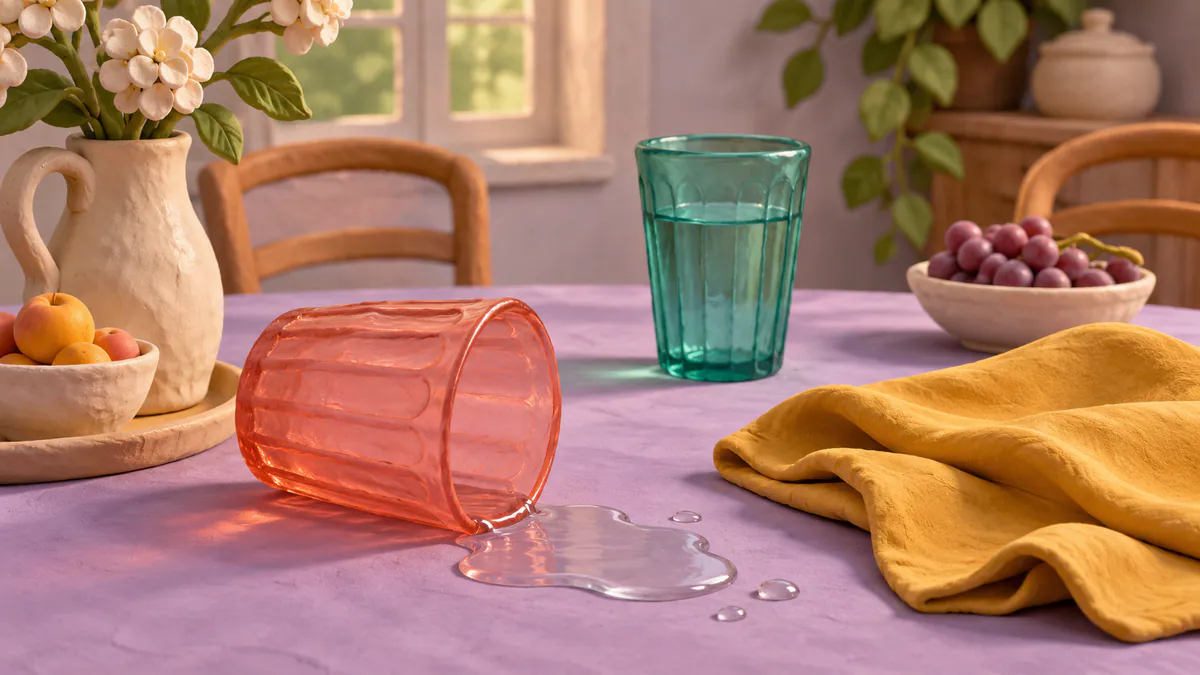
You reach across the table and your glass tips over. Conversation stops for a moment. Before anyone has found a cloth, you are already imagining what everyone thinks of you. A small accident can feel surprisingly public when you are the person standing beside it.
You do not have to convince yourself that spilling a drink is enjoyable. You can feel embarrassed and still deal with what actually happened. The useful question is what needs attention now, rather than what the accident supposedly says about your character.
Put the practical problem first
Set the glass upright if it is safe to touch. Let people nearby know about the spill so they can move a phone, bag, or plate. Ask the host, “Where can I find a cloth?” A clear question gives everyone something useful to do.
If the glass has broken, keep people away from the pieces and ask the host how they want to handle the cleanup. Avoid grabbing fragments with bare hands. If the drink is hot or someone is hurt, attention to the person comes before concern about how awkward you look.
You do not need to clean someone else's furniture with whatever product happens to be nearby. “What would you like me to use?” respects the host's belongings and avoids turning a hurried attempt to help into another problem. Follow their lead about the surface or fabric.
Offer one apology that fits what happened
A simple apology can acknowledge the inconvenience: “I'm sorry, I knocked my glass over. Let me help.” If the drink landed on someone, address them directly: “I'm sorry that went on your sleeve. What would be helpful?”
There is no need to add a verdict about yourself. “I'm such an idiot” shifts the conversation toward whether other people should reassure you. “I knocked it over” describes the event and leaves room to respond to it.
This does not mean you are only allowed one sentence or must perform perfect confidence. You can stumble over your words. The aim is to make the apology useful, not to turn apologizing into another standard you can fail.
Let help remain help
Someone may bring a towel before you have finished speaking. You can accept it with “Thank you” instead of insisting that everyone sit down while you repair the whole evening. Several people handling a spill does not establish that you have become a burden.
If the host says they have it covered, ask once whether there is anything else you should do. Then allow their answer to count. Repeatedly reaching for the cloth after they have asked you to step aside can make the practical task harder.
The NHS guidance on self-esteem suggests considering what you would say to a friend when you notice self-criticism. You might offer that friend a towel and continue the conversation. You can offer yourself similarly ordinary treatment without denying the inconvenience.
Separate attention from judgment
People may look because something moved, a glass made a noise, or water is spreading toward their belongings. A glance does not tell you everything they think. You can notice that attention without treating it as evidence that everyone has formed a lasting opinion.
Try a description that stays close to what you know: “A few people looked over, and two helped.” That is different from “Everyone thinks I ruin things.” The second sentence contains conclusions you cannot verify from the spill alone.
If someone makes a joke, you can respond briefly if you want to, or simply keep cleaning. You do not owe the group a performance about being clumsy. If a remark bothers you, “I'd rather not make a big thing of it” is enough to state your preference.
Address actual damage separately
Sometimes a spill does cause damage. In that case, returning to the conversation does not mean pretending nothing happened. Once the immediate cleanup is finished, speak privately with the person whose belongings were affected.
You might say, “Please let me know what the cleaning options are. I'd like to discuss putting this right.” Avoid promising a specific result before anyone knows what is needed. Ask what happened, listen, and agree on a realistic next step together.
An apology and a repair conversation can be proportionate without becoming a long account of every mistake you have ever made. Responsibility concerns the particular damage. It does not require you to argue against your own worth.
Rejoin the gathering in a small way
When there is nothing more to do, take your seat, get a fresh glass if you want one, and listen to the current conversation. You can ask someone to finish the story they were telling. The transition may feel awkward; it can still happen.
If your mind keeps returning to the moment, remind yourself of the completed actions: you acknowledged it, helped, and arranged any necessary follow-up. You do not need to rehearse another apology just because the memory is still uncomfortable.
For related situations, see speaking up about a wrong cafe order and leaving a gathering before everyone else. You can also practice a brief repair conversation with TherapyWithAI using fictional details. AI can help explore wording; it cannot know what guests thought or replace professional care.
If embarrassment or fear of mistakes repeatedly keeps you from everyday activities, consider talking with a qualified mental health professional. For this particular evening, your task can stay small: attend to the spill, take responsibility where needed, and let yourself remain a guest.