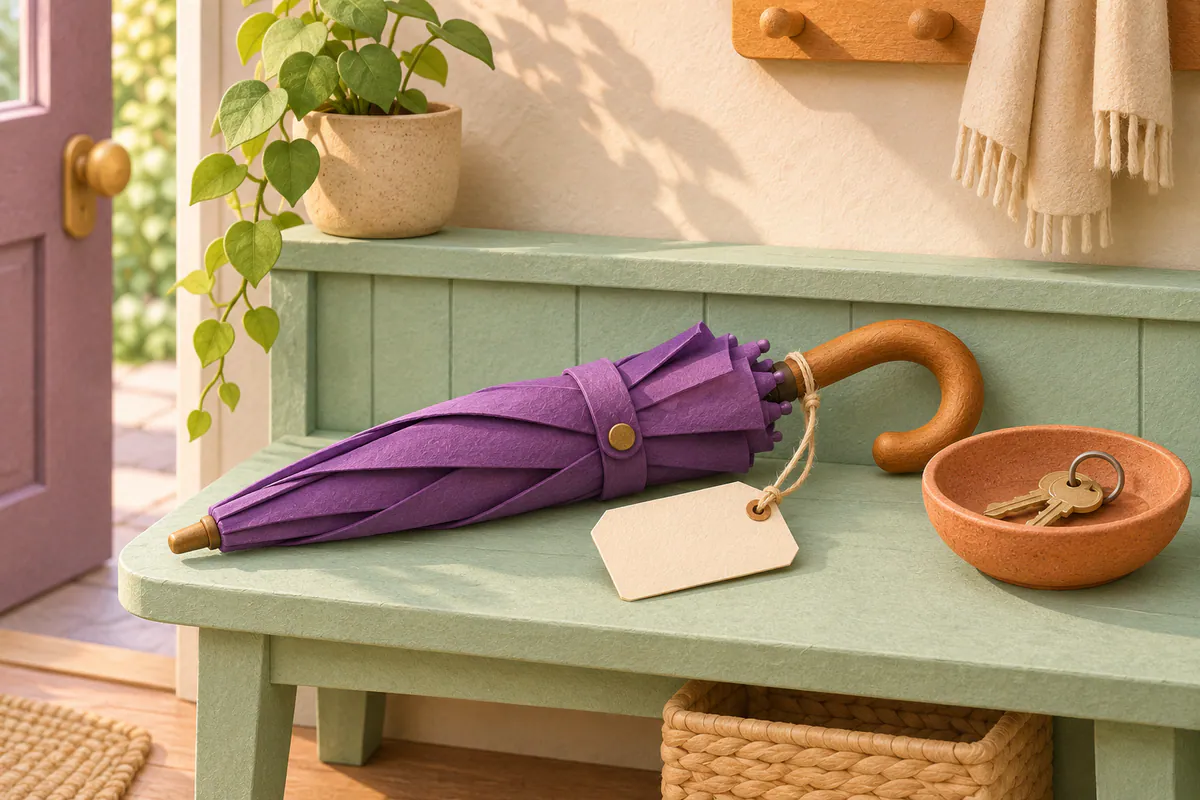
You find the umbrella behind your coat and remember that you meant to return it two weeks ago. Now the delay feels harder to explain than the original favor. You imagine a disappointed reply, start composing a long apology, and put the umbrella down again. The practical task is still small, even if the embarrassment has grown around it.
Returning something late calls for ownership and a workable arrangement. It does not require a perfect account of why you forgot, or certainty that the other person will be pleased. You can respect their belongings while speaking to yourself with ordinary courtesy.
Find out what needs to be returned
Before sending a message, locate the item and check its condition. Gather any parts that came with it: a book jacket, a charging cable, a storage bag. If it needs routine cleaning, follow the owner's instructions or ask rather than experimenting with something that is not yours.
This turns a vague guilty feeling into a concrete situation. “I still have Maya's umbrella, and it is ready to return” is useful information. “I am a terrible friend” gives you no return address. Keep the description close to what you actually know.
If you cannot find the item, say that honestly. Do not claim it is in your bag just to make the first message easier. You can explain that you are looking for it and ask about a reasonable next step. If it is damaged, disclose that before arranging a handover.
Send a message that includes an action
A straightforward message might be: “I realized I still have your umbrella. I'm sorry I kept it longer than we agreed. Can I bring it over tomorrow evening, or is another time better?” This names the item, acknowledges the delay, and gives the owner a choice.
Use a time you can actually manage. Offering five possibilities because you feel guilty can create a second problem if none fits your schedule. If dropping it off is not practical, ask what arrangement works instead of assuming the other person will collect it.
You may want to explain briefly: “I put it behind my coat and forgot.” That is different from writing a detailed defense. The explanation can be one sentence; the return plan deserves at least as much attention. If no deadline was agreed, you can still say you should have checked in sooner.
Leave room for their response
The owner might say there is no rush, ask for it today, or tell you they were inconvenienced. You do not need to predict the answer before you contact them. Give them the chance to say what they need, including something you had not considered.
If they are annoyed, try responding to the specific impact: “I understand you needed it yesterday. I'm sorry. I can bring it at six today.” Avoid promising that you will never forget anything again. A commitment you can keep is more useful than an unlimited promise made under pressure.
If their requested time does not work, say so and offer the earliest realistic alternative. Taking responsibility does not mean agreeing to an impossible arrangement. You can also ask whether leaving it with an agreed person or at an agreed location would help; do not leave belongings unattended without permission.
Notice when the apology becomes self-punishment
An apology addresses what happened between you. Repeating that you are careless or undeserving of help can shift the conversation toward getting reassurance. You may feel embarrassed without asking the owner to settle that feeling for you.
The NHS guidance on self-esteem suggests considering what you would say to a friend when you notice self-criticism. You might tell that friend to send the message and return the umbrella, rather than make them prove they are a good person first.
This does not erase the inconvenience. It keeps responsibility specific enough to act on. “I returned it late” can be true alongside “I can handle the next step thoughtfully.” You do not have to choose between denying the delay and condemning yourself.
Complete the handover and close the loop
Once you agree on a plan, put the item where you will see it before leaving. Add a reminder if that helps. If circumstances change, update the owner promptly rather than waiting until another promised time has passed.
At the handover, a simple “Thanks again for lending it to me, and sorry for the delay” may be enough. Follow through on any agreed repair or replacement. If the owner says the matter is settled, you can let the practical task end without sending several more apologies.
For future loans, ask when the item is needed back and note that date when you receive it. If borrowing creates more difficulty than it solves, you can choose another option next time. This is a small adjustment, not a rule that you must never accept help again.
For related everyday support, see speaking up about a wrong cafe order and handling a meal that goes wrong. You can use TherapyWithAI to rehearse a short return message with fictional details. AI can help explore wording; it cannot know the owner's feelings or replace professional care.
If fear of ordinary mistakes regularly prevents you from contacting people or managing daily responsibilities, consider support from a qualified mental health professional. For this item, the next step can remain manageable: tell the truth, agree on a return, and follow through.