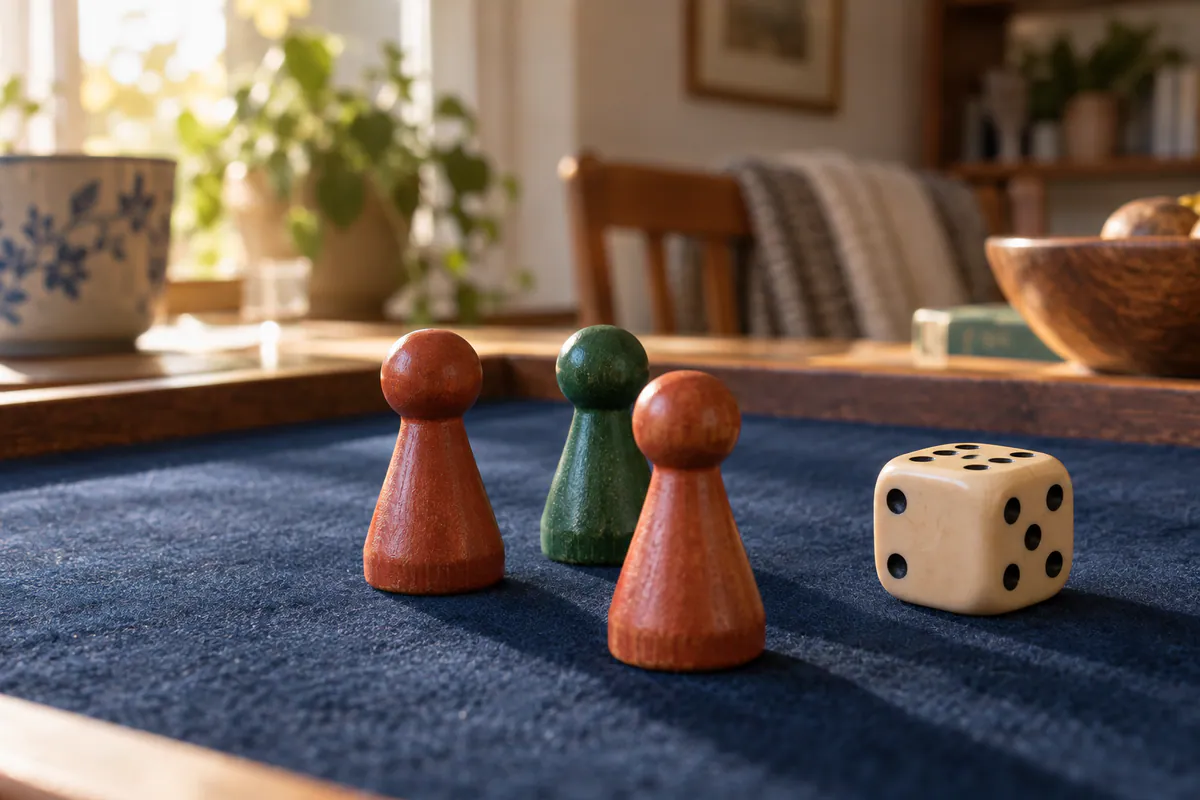
The game was supposed to be a relaxed part of the evening. Then you lost, perhaps after an obvious mistake, and now you feel embarrassed or unexpectedly irritated. Everyone else seems ready for another round. You are trying to smile while replaying the moment you could have done something differently.
Caring about a friendly game does not make you a bad friend. What matters next is how you handle the feeling and how you treat the other players. You can acknowledge that the result stung, take a short break, and decide whether another round would actually be enjoyable. You do not have to turn the loss into a verdict on your character.
Separate the result from the story about yourself
Start with the plain event: “I lost that round,” or “I missed a move I knew how to make.” Compare that with “I am stupid,” “Everyone thinks I am useless,” or “I ruin anything competitive.” Those larger statements contain conclusions the score cannot establish.
The NHS guidance on reframing unhelpful thoughts suggests noticing a thought and checking the evidence for it. Here, a more balanced sentence might be: “I made a mistake in a game I care about, and I do not know what everyone else is thinking.” You do not need to replace disappointment with forced praise.
This is a small everyday reflection, not a diagnosis or treatment. If the exercise feels like another demand to perform correctly, leave it alone for now. You can choose a considerate next action before you have sorted out every thought.
Take a break without making it a punishment
A brief, ordinary pause can give you room to decide what you want. Put down your pieces, get some water, or step away from the table. Say what you mean: “That one got to me more than I expected. I am going to take five minutes.”
The useful part is giving the others enough information to continue their evening. You can add, “Feel free to start without me.” Avoid making your return depend on someone reassuring you that you really deserved to win, or on the winner apologising for winning. They can care about your feelings without disputing the result.
If leaving the table is impractical, decline the next round and watch, help with refreshments, or suggest another activity when the current game ends. Choose an option you can do without using silence or sarcasm to signal that everyone must repair your mood.
Congratulate the winner in a way you can mean
You do not need a glowing speech. “Well played” or “That was a good move at the end” can be enough. Keep the comment specific if that feels more honest. You can be disappointed in your result and still recognise another person's play.
If you snapped, address the behaviour directly: “I was frustrated and spoke sharply. I am sorry.” Explaining that losing hurt may provide context, but it does not replace the apology. Let the other person respond without requiring them to say the sharp comment was harmless.
Also distinguish ordinary celebration from comments that cross a line for you. A calm request such as “I am happy to play, but please stop making jokes about my intelligence” addresses the actual behaviour. You do not need to accept personal insults as the price of being a good sport.
Decide what the next round is for
Before playing again, ask yourself a concrete question: “Would I still want another round if I lost again?” An honest no can be useful information. You may be looking for a chance to erase the feeling rather than a game you want to play.
If you do continue, choose one small aim within your control: checking the rules before a move, taking a little more time, or noticing a strategy another player uses. Winning can remain desirable without becoming the only acceptable outcome. These are choices about how to spend an evening, not promises of better performance.
You can also ask about the group's expectations next time. Some people enjoy close competition; others want a casual conversation with a game in the background. Agreeing on an easier game, teams, or a cooperative option may help the evening fit the group. Nobody has to pretend that everyone enjoys the same format.
Review one moment later, then let the evening end
If you want to learn, pick one decision after the emotional intensity has eased. Ask, “What could I try there next time?” A short, specific answer is more usable than mentally replaying the whole evening. You may also decide that a social game does not need a performance review.
For private reflection, TherapyWithAI can help you find words for the feeling using a made-up, non-identifying example. AI cannot assess your mental health or replace professional care. If distress or anger repeatedly affects your relationships or daily life, consider talking with a qualified professional.
If playing has begun to feel like a duty, our guide to when a hobby feels like another obligation offers a related perspective. For tonight, the task can stay small: respect the other players, make room for your disappointment, and choose whether you want to keep playing.