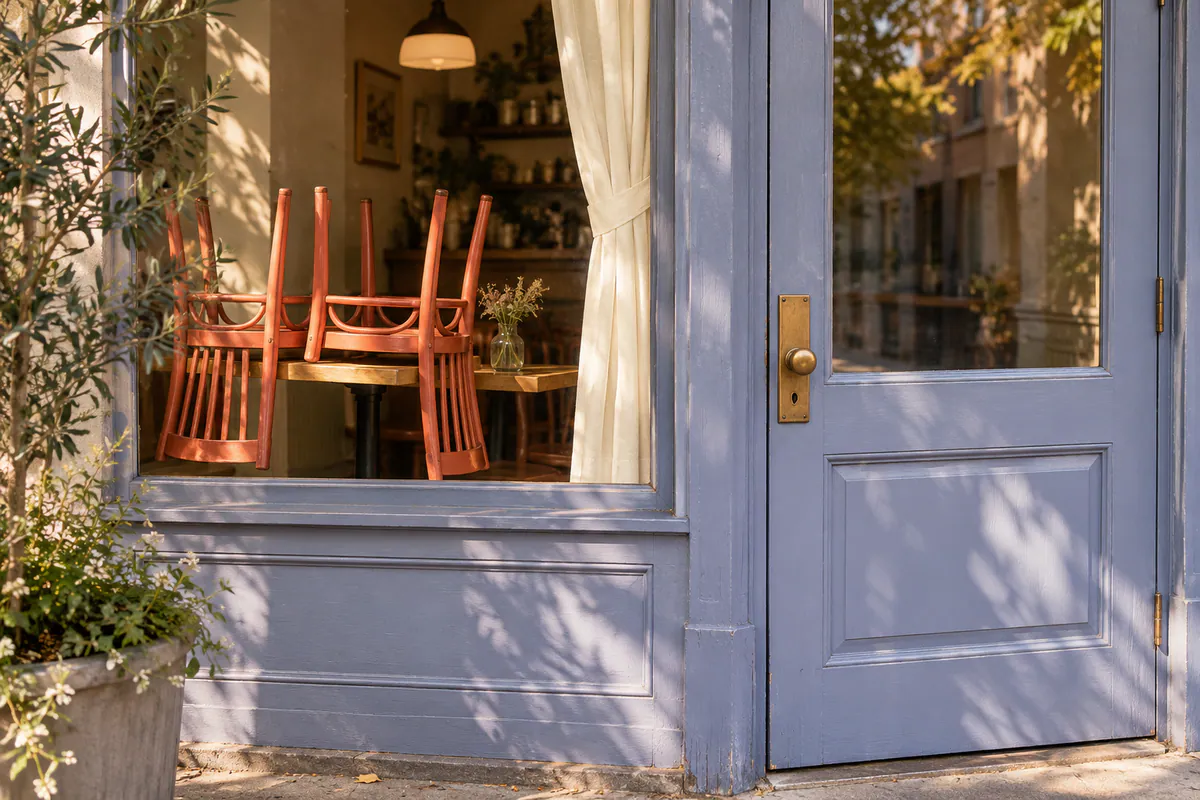
Your usual cafe is closing. You read the announcement twice, then think about the Saturday mornings you spent at the window table. Someone else says there are plenty of cafes nearby. That may be true, but finding another cup of coffee is only part of what has changed.
A familiar place can hold a particular shape of everyday life: a pause before work, a conversation with someone who recognizes you, or somewhere to go without organizing an occasion. You can be sad about losing that place without having to prove that the closure is a major life event. The practical question is what you want to remember, and which part of your routine you would like to keep.
Name the part you will actually miss
Try finishing this sentence: “What I got here was...” Be more specific than “a nice atmosphere.” Perhaps you had an affordable hour away from a crowded home. Perhaps it was the only nearby venue with an entrance and seating that worked for you. Perhaps a staff member knew your usual order, making a quiet week feel a little less anonymous.
Those are different needs. They point toward different next steps. A beautiful new cafe may not replace an accessible meeting spot; an online group may not replace somewhere you can sit between errands. List two or three features that mattered, including practical ones such as cost, opening hours, toilets, transport, or being welcome to stay.
You do not need to explain your entire attachment to anyone else. “I'm going to miss my Saturday routine there” can be enough when a friend does not understand your reaction.
Choose a goodbye that fits the situation
If the place is still open, you might make one final visit, thank someone, or write down a favorite memory. A simple message could be: “Your Wednesday opening hours gave me a calm place to wait after my appointment. Thank you for making me feel welcome.” Specific appreciation does not require a grand speech.
Remember that the people working there may be dealing with their own disappointment, uncertainty, or a demanding final week. Ask before taking photographs of people or private areas. Avoid pressing staff for details about the closure or expecting them to comfort you. You can care about the place while respecting that its ending belongs to them too.
If it has already closed, there is no missed obligation to create a perfect farewell. You could keep an existing photo, tell a friend about a good afternoon there, or simply notice your sadness when you pass. Buying memorabilia or visiting the building repeatedly is optional. A memory does not become more valid because you preserve an object.
Separate the place from the connection
Think about whether you want to stay in touch with anyone you met there. If you already chat with another regular, a low-pressure invitation might be: “I've enjoyed our Saturday conversations. Would you like to exchange numbers and meet for a coffee sometime?” Let their answer be voluntary. Familiarity in one setting does not automatically create a friendship outside it.
You can also tell an existing friend what has changed: “My usual stop is closing. Could we take a short walk together next Saturday?” The NHS guidance on mental wellbeing includes spending time with other people and sharing experiences. That is a broad wellbeing suggestion, not a promise that arranging company will remove disappointment about this particular closure.
Keep contact details private and ask people directly. Do not collect staff or customers' information from a group list to rebuild a community they have not agreed to join.
Preserve one part of next week's routine
Suppose your old routine was a ten-minute walk, a coffee, and half an hour reading before grocery shopping. You might keep the walk and reading time, even if the coffee happens at home for now. Or you might meet your walking companion at a different corner and decide together where to go.
Make the first plan small and concrete: “At ten on Saturday, I'll walk to the library and read for twenty minutes if there is a seat.” Check opening hours and access yourself before relying on a new venue. If a paid outing no longer fits your budget, a free public space may be worth considering where one is available.
There is no requirement to find a new favorite immediately. Treat a first visit as information: Was it comfortable? Could you afford to return? Did it offer the particular thing you needed? A different place can be useful before it feels familiar. If arriving alone is the difficult part, see when eating alone feels awkward.
Leave room for both appreciation and change
You may enjoy a new place and still miss the old one. You may also discover that you want a different routine altogether. Neither choice erases what those afternoons meant to you. Try a limited sentence instead of a verdict about your whole neighborhood: “This was a place I valued, and I don't yet know what comes next.”
You can use TherapyWithAI to reflect on what a familiar place provided and sketch a manageable next-week plan. Use general details rather than other people's private information. AI support does not replace professional care or know which local venues are suitable for you. If persistent distress is affecting everyday functioning, consider talking with a qualified mental health professional. For now, one memory and one practical next step can be enough.